

 guest post by Asha Dahya
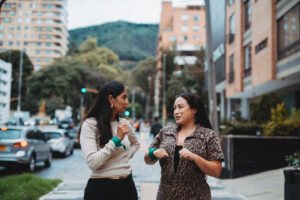
Earlier this month, my team and I flew to Colombia for a week to conduct interviews for a new podcast series, Green Tide Rising. Over eight episodes, Latina host and producer Kat Lazo and I plan to showcase the work that Latin American feminists are doing to push for reproductive freedom and abortion access in arguably some of the most hostile areas for gender equality on earth.
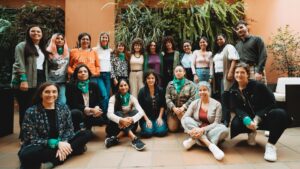
Our series follows renowned human rights lawyer and researcher Ximena Casas Isaza, who is embarking on a first-of-its-kind study tracking a decade of abortion criminalization across Latin America and the Caribbean. Her goal is to initiate legal cases that can change policy and overturn abortion restrictions. While we were in Colombia, Ximena held a conference with six of the 10 partner countries participating in her research – Chile, Peru, Guatemala, Brazil, Uruguay, and Argentina. Kat and I were able to interview representatives from each of the countries – lawyers, gynecologists, journalists, activists, etc.– who talked about the state of abortion access and gender equality in their countries.
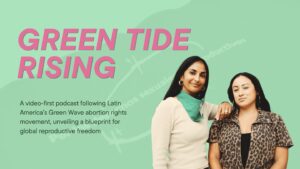 Simultaneously, we are highlighting the extraordinary activism of what has become known as the Green Wave Movement, originating in Argentina in 2015 as a result of the Nia Una Menos movement, which focused on the elimination of gender violence and later morphed into the fight for abortion access and legalization.
What is fascinating about the Green Wave is that they have successfully created a global symbol—the green bandana or handkerchief—now recognized as a symbol of solidarity for the rights of women and pregnant people to make and control their own decisions about their bodies and lives. They have also been successful in legalizing abortion in Argentina (2020), a number of states in Mexico (2021), and Colombia (2022) because they have a very different approach to what we are seeing in the United States.
Ahead of a very contentious U.S. presidential election where abortion is the top issue on the ballot, along with two major U.S. Supreme Court rulings on abortion cases, and where approximately 13 states are expected to have abortion ballot measures, Green Tide Rising is a clarion call for North Americans to sit up and take note of what Latin American feminists are doing.
Green Tide Rising will be a shift in the narrative. For 50 years, the world has looked to the U.S. for leadership on reproductive rights – while Roe v Wade stood. As a result, we have become accustomed to the “white savior” narrative, where the U.S. has a hand in influencing what happens in other countries and in shaping the way countries view gender equality based on what their leaders choose to fund and uplift. With vast financial resources, a heavy-handed approach, and global policy and militarism, that influence has been shored up. However, U.S. leadership on reproductive rights has changed drastically, thanks to the 2022 Dobbs Decision. So, who does the world look to for a roadmap for creating reproductive freedom in a hostile landscape? It’s time for us to shift our gaze from the Global North to the Global South – and take note of the Green Wave.
 We can learn many lessons from the Green Wave, and many we will share on Green Tide Rising. One of the key components is the way they position abortion access, not just as a legal right but as a human right. In 2018, the United Nations declared that access to abortion and the ability to make autonomous decisions about our lives and bodies is a human right. The United States has yet to get on board with this.
Across Latin America, the Green Wave has brought together young and old, religious and secular, doctors, lawyers, students, mothers, grandmothers, politicians, community leaders, activists, and more in a movement of solidarity that shows that while each of us may be different, we all have the right to decide for our own bodies and lives.
While we were in Colombia, one of the common threads among the activists we spoke with was the way a country views women and girls; their place in society ties directly in with the way it values gender equality in general, and that can set the tone for many issues. The Green Wave is not trying to legalize abortion in countries where they are arresting and sentencing women for suspected abortions that are actually miscarriages and stillbirths. They are working to fundamentally shift the way culture and society view women, girls, and pregnant people.
How a country treats its most vulnerable says a lot about where it chooses to put resources and what it decides is worthy of funding. Currently, the United States does not have affordable childcare in any state, according to a recent report from the U.S. Department of Health and Human Services, and is the only industrialized nation not to have a federal paid leave policy. With the highest maternal mortality rates in the developed world, as well as only half the country allowing abortion access – thanks to the impact of the Dobbs decision – medical professionals and students are choosing to leave states that are hostile to abortion rights, causing a dangerous reduction in maternal healthcare. It is a disaster for bodily autonomy. But that is not the end of the story.
There is still time to take back the ground and set the narrative for our future. A number of organizations in the U.S. are already following the lead of The Green Wave, including Pregnancy Justice, IfWhenHow, and The Center for Reproductive Rights. It is exciting to see a movement led by women of color from the Global South showing the Global North the way forward, and we are thrilled to have the opportunity to showcase this for our audience.
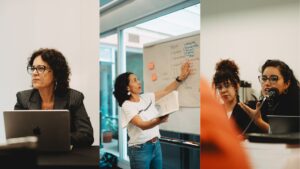 The goal is to release Green Tide Rising in the lead-up to the November election. We will release episodes on all of the platforms where you traditionally get your podcasts, as well as on YouTube, Instagram, and TikTok – all video and social media platforms that are becoming increasingly popular for podcast listeners, especially with Gen Z. We hope to impact first-time voters, socially minded people, and those who are passionate about reproductive freedom and are looking for new inspiration and a unique set of strategies beyond what has been tried in the U.S. in the courts and Congress.
This project would not be possible without the immense support from Dr. Nancy O’Reilly and the Women Connect4Good Foundation. At a recent conference in Los Angeles, Dr. Nancy talked about how she is committed to funding and supporting women, especially women of color, who are leading the way and creating change in our world. We are incredibly grateful for her generosity and passion for uplifting the voices and work of women who want to make a difference.
As we continue to shape our episodes over the next few months, you can follow @greentiderising on Instagram or myself @ashadahya as we post updates and share more about the interviews and videos we create. You can see more info and images about Green Tide Rising on our fiscal sponsor page, where we are currently seeking the rest of our funding for the project.
This is more than just a movement to liberate bodily autonomy it is a multi-faceted movement with room for everyone. There are many approaches toward the singular goal of reproductive freedom. As Ximena Casas Isaza shared during our interview in Colombia, there are “many tones of green, and there is a place for everybody.” I hope you read this knowing that you, too, can play a part in this ongoing fight and that when we lead with joy, empathy, solidarity, and hope, there is a path forward.