

 Throughout history, no single animal has had a deeper impact on the human race than the horse. The domestication of horses started approximately 6,000 years ago in the Ukraine, southwest Russia, and west Kazakhstan. Since that time, horses have transported us, helped us cultivate food, and been instrumental in building our societies. They’ve been with us in wartime situations, in sports, in good times and bad, and oftentimes, they’ve helped us heal.
While horses don’t play the direct role in our growth and survival that they once did, the need for the emotional connection and support they bring remains unchanged. Whether it is work, stress, personal problems, or just the day-to-day grind of modern life, there’s nothing more healing than a ride on a horse. In fact, it has been medically linked that horses improve both mental and physical health.
Researchers are looking at ways that partnering with horses can impact well-being. An emerging body of scientific evidence indicates that interacting with horses not only improves health and well-being, according to a recent article in The Washington Post, it can also help people with numerous physical and mental health conditions, from children with motor disabilities to adults with post-traumatic stress disorder (PTSD).
Horses are also big business. The U.S. Horse Council estimates that in 2023, there were 6.6 million horses in the United States. That population has a collective economic impact of $177 billion, influencing a broad spectrum of industries—everything from agriculture and tourism to veterinary services to technology. The 2023 Equine Economic Impact Survey illustrates the interconnectedness of the equine world with other sectors. There are also 2.2 million jobs associated with those numbers, and that doesn’t just include breeders, trainers, veterinarians, and farriers, it also accounts for a number of truck drivers, nutritionists, police officers, and journalists. The list goes on and on.
Horses Need Our Help
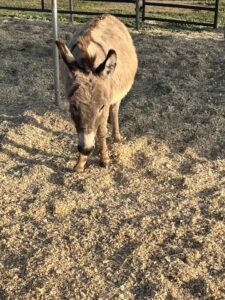
Each year, tens of thousands of horses are sold, rescued, or surrendered to livestock auctions. It could be any reason – financial hardship, neglect, health issues, or a lack of owner responsibility, space or facilities. These horses aren’t necessarily old or infirm; often just in a situation where their circumstances have changed. Once race or show horses, family ponies, pets, riding or trail horses, they are often discarded and, along with every other horse in the U.S., are now just one bad sale away from a terrible fate.
Horse slaughter is abhorrent to most and banned in the U.S., but the trade—buying, transporting, and killing horses for human consumption—is still a thriving industry. According to the ASPCA, over 1.6 million U.S. horses were exported for slaughter from 2001–2020. While that number has declined, thanks in part to U.S. banning the practice in 2007, tens of thousands of American horses continue to be exported to slaughterhouses in Mexico and Canada.
These horses come from many different backgrounds and are, more often than not, healthy and adoptable, many times sent to auctions for their next chapter in good faith. However, if they are purchased by a “kill buyer” their future becomes pretty bleak. Kill buyers are individuals or dealers who buy horses on behalf of slaughter plants. At an auction, any horse priced low enough may be bid on by a kill buyer, who often pays by the pound or at marginal prices for animals no one else bids on. A seller may not recognize what’s happening – and, according to National Geographic – might not realize their horse could be bought for slaughter because kill buyers operate quickly and quietly.
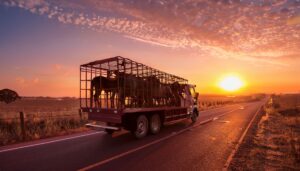
Once purchased, these horses aren’t immediately delivered to the slaughterhouse, they spend time in a kill pen. A kill pen is a holding area, usually at or near a livestock feedlot or a slaughter pipeline, where horses are kept after being purchased and before being shipped to slaughter by a kill buyer. According to Karuna Horse Rescue, kill pens “hold masses of horses in cramped, unhealthy and under-kept conditions.” A kill pen is the last stop for many horses before they are exported to slaughterhouses –typically in Mexico or Canada – and are known for crowded, unsanitary conditions with little or no veterinary attention, poor feed quality, and a lack of clean water.
In a joint investigation between the Center for a Humane Economy and Animals’ Angels, the organizations found that,

“Horses who enter the slaughter pipeline endure suffering at each stage of the commercial process—from acquisition at auctions to holding at short-term and longer-term facilities, to transport and slaughter. Since 2007, investigations from Animals’ Angels have revealed that the instant a horse is designated a “kill horse,” handling and treatment deteriorate from horses classed as companions or working animals. It becomes a wait-and-see survival standard for our American horses until the intentional act of slaughtering and butchering.”
Kill buyers add another level of complexity to this. To offset income lost by increasing regulations, public sentiment, and awareness, many have found a new, even more lucrative business venture and are taking it online. Reaching out via social media, these buyers are using the threat of shipping the horse to slaughter as a way to entice private individuals to purchase the animals. According to Animal Wellness Action, the online broker photographs the horses inside a kill pen and then posts a deadline to spur action. The ASPCA describes kill pen bailouts as “deceitful and harmful operations that buy and sell horses and threaten legitimate equine welfare efforts across the nation.”
Some of these horses are indeed being “saved” and given a reprieve from certain death, while others are not so lucky.
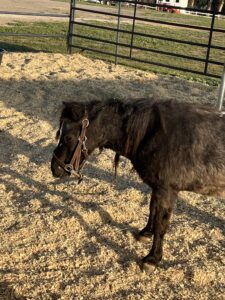
These aren’t just any horses, either. National Geographic reports that ex-racehorses (Thoroughbreds and Standardbreds) make up roughly 10 percent of horses sent to slaughter. American Quarter Horses are the single largest group in the slaughter pipeline. Overall, it’s estimated that more than half of all slaughter-bound horses come from the racing or show industries, with the remainder representing a mix of breeds and backgrounds—and even include some wild horses.
The ASPCA contends that “saving” an at-risk horse might seem like the right thing to do on the surface, in reality, participation in the bail-out scheme actually fuels the cruel practice of horse slaughter by putting money into the pockets of those who profit off of slaughter.
To the Rescue
There are things we can do – both individually and collectively – to prevent horses from ending up in the slaughter pipeline in the first place.
Legislation – Federal legislation like the proposed Save America’s Forgotten Equines (SAFE) Act would prohibit the slaughter of horses in the U.S. and the export of horses for slaughter abroad. The Animal Welfare Institute sees this kind of nationwide ban as imperative because the current patchwork of state laws has gaps that allow horses to still be sold and shipped to slaughter in Canada or Mexico.
Enforcement – Enforcement of existing and pending laws is critical – and includes enforcing existing transport regulations, closing regulatory loopholes, and monitoring auctions where kill buyers acquire horses. The Animal Welfare Institute points out how kill buyers often operate “under the radar” at livestock auctions and strengthening oversight can disrupt their pipeline.
Rescue – Expanding the capacity to rescue and rehome horses is a viable solution that catches horses who might otherwise slip into kill pens. There are hundreds of dedicated horse rescues, sanctuaries, and adoption programs nationwide dedicated to giving at-risk horses a second chance. Supporting these organizations – by volunteering, funding, and through collaborative programs – can directly save horses from kill pens and creates a sustainable way to absorb “unwanted” horses.
Ultimately, horses are part of our story, and their presence is woven into the fabric of our history. That’s why it is our responsibility to protect the animals that have done so much for us. The slaughter pipeline remains a tragic reality for too many horses in this country, but it is not inevitable. We can rewrite the story for thousands of at-risk horses with stronger laws, better enforcement, responsible ownership, and continued support for rescue efforts. They’ve carried us through centuries of growth—now it’s our turn to walk with them into a future where compassion and responsibility replace exploitation. Our horses deserve nothing less than our very best.