


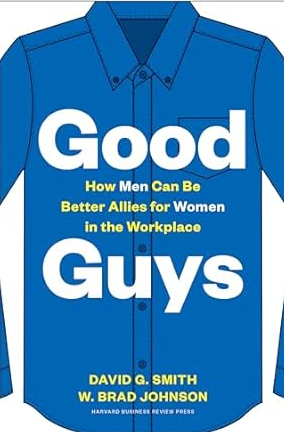
The title of this post is borrowed from the book, Good Guys: How Men Can Be Better Allies for Women in the Workplace, which is co-authored by W. Brad Johnson, PhD, and David G. Smith, PhD. In his recent podcast interview with Dr. Nancy, Dr. Smith told her that his personal story formed his work to study and write books about what keeps women from advancing in the workplace—his connection with his wife while they were both in the Navy, being treated differently, with markedly different opportunities, resources, and engagement with mentors. His co-author, Dr. Johnson, was also in the Navy, as was his sister, Shannon, who got reprimanded for outperforming men in fitness tests, was told to smile more, and was criticized for being “emasculating” in her reviews of men under her command. The authors say the Navy is not unique. It mirrors many corporate situations, where men have dominated advancement for decades.
In this workplace environment, it would take a very courageous man to stand up when they see a colleague being treated unfairly. What else would it take? How do we change the culture that has created a second-class citizenship for women at work and throughout life? Many men want to help but don’t know how. Dr. David Smith listed several reasons, chief among them is considering most gender issues “a women’s issue.” His first suggestion was to take the word, women, out of company programs to advance women or train employees about mentoring and allyship. When the men in the workplace see the word, they tune out as if it didn’t concern them.
Gender equity and issues pigeonholed as women’s issues are very much an issue for everyone. Making life more difficult for half of the population doesn’t help anyone. We need 50-50 participation, at home and at work, to support men and women and their children into the next generation. In Dr. Nancy’s book, In This Together, we cited studies by the Boston Consulting Group reporting that for family leave to work, top male managers had to use the leave to set an example for employees, especially men, at every level. Providing family leave when couples have a baby is only a benefit if both parents take it
 Housework is often seen as women’s second job, and studies estimate unpaid caregiving costs the economy billions. Dr. Smith said being an ally doesn’t stop at home, and he shares housekeeping duties with his wife. Dr. Johnson said he observed his dad cooking dinner, doing dishes, and making sure he got his homework done while growing up. These interactions and equal sharing at home and at work will transform outdated attitudes about what is women’s work and women’s issues. Making it no longer “helping with the dishes” but taking responsibility for half of the housework required for maintaining a home where everyone lives.
Allyship goes both ways. Women must ask for help, and men must offer it. How this is done could be a slippery slope. It takes listening and not assuming you know the answers before you ask or offer. Many women have a difficult time asking. There are multiple reasons: fear of showing vulnerabilities, being seen as incompetent and not able to do the job, imposing on someone else’s time and responsibilities, and dozens more, depending on experience or lack of it. The next step, though, is to accept help when it’s offered.
Several years ago, Dr. Nancy interviewed Summer Anderson, who worked in a male-dominated field and looked to her father for a model for pursuing a career. When Dr. Nancy asked about female mentors, Summer said there were no women working in her field at the time, but she found an excellent mentor in the manager who gave her the opportunity, and he mentored her into her next career move. That raises an important point: when there are few women in upper management, how do women advance through the pipeline without male mentors and allies?
Dr. Smith also raised the concern that some men feel they will lose something if women advance in the workplace. We’ve found that other women often experience that same fear. The facts show the opposite to be true. As part of the allyship argument, Dr. Smith lists the business case for advancing women. Companies and organizations are more profitable with more women in upper management. More women are advanced at lower levels of the organization. More is more, not less. The more creative women leaders are involved, the more opportunities are created for other people of both genders to advance. Add equal pay to that, and the entire economy benefits for everyone, reducing poverty, especially for women left out of the pipeline.
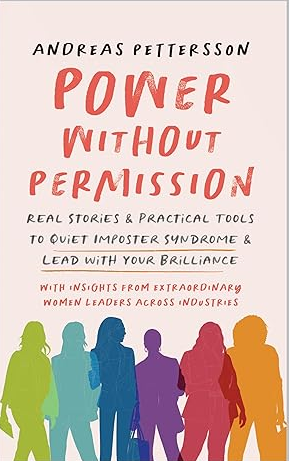 Some of the men we’ve spoken with have expressed amazement that the US doesn’t have gender equity, that our systems would intentionally keep women from earning equal to men. In his podcast interview with Dr. Nancy, Andreas Pettersson, author of Power Without Permission, was shocked to find that our culture equated power and leadership with men. His native Sweden has nearly complete equity with no such gender bias. He said Sweden needed women after WWII to fill the gaps in the workplace left by men who died in the war. To empower them to do their jobs, Sweden asked what they needed and designed a system of care, childcare, and other supports to enable everyone to work equally. Pettersson’s book shares the stories of women in the workplace, and he has started a free online mentoring program for women, hoping to attract male allies and guide them in ways they can help.
It’s time for women and men to serve as allies for one another. We are in this together. The more we share in what makes us personally feel rewarded and productive, the more successful we will all be. The culture we’ve grown up with obviously forms how we view the world, but we also have a personal responsibility to honor each other’s abilities and the respect and consideration we all require. We should be grateful that not all of us excel at the same things. Our differences make us stronger, not weaker. Owning our unique qualities and learning from one another help us grow and develop ways to support ourselves and future generations. That’s how we build a better community—as allies together.