

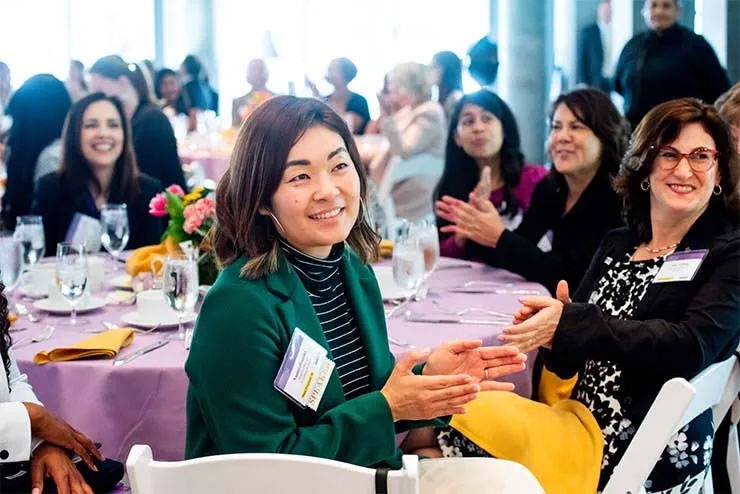
 For fourteen years, the Center for Advancement of Women at Mount Saint Mary’s University (MSMU) has produced the Annual Report on the Status of Women and Girls in California™ with one important mission—to identify issues that prevent equity for women and girls. This provides leaders across a wide spectrum of organizations with information crucial to creating a more equitable landscape for everyone. The Center’s thorough examination of statistics highlights areas that continue to hold women back from equitable lives and livelihoods. This year’s report focuses on the arts, which provides a benchmark for equity as an industry as compared to other industries, portrays the images and stories of women and girls, and benefits to artists and audiences alike.
The Report is divided into three parts: Section One covers the “Arts and Culture Workforce,” discussing how many women are working in the arts and in what roles; Section Two reports on “Education and the Arts,” including how students benefit from a curriculum in the arts; and Section Three tracks how little things have changed by looking at “Persistent Issues Faced by Women.” The key here is the word “persistent.” Women and girls are stuck, not just in California but throughout the country, in societal roles, pay scales, and systems that do not support positive change, advancement, or even emotional well-being in many cases.
While women are living longer than men and 48% report being in very good to excellent health, “the percentage of women who report issues with emotional well-being has generally been increasing — and the proportion of women reporting stress and anxiety issues is significantly greater than the proportion of men.” To call the lack of quality of life an issue seems like an understatement. What good is living long if we’re not living well? However, the purpose of Section Three is to address the persistent issues that are the foundation, perhaps even the direct cause in some cases, of women and girls’ decline in emotional well-being.
Financial Discrimination and the Motherhood Penalty
Women continue to face financial discrimination, most glaringly, when they become mothers. With U.S. Census Bureau statistics tracking full-time working women from 2018 to 2023, the Report shows only modest gains, which are wiped out by the margin of error. Nobel Prize Winner Claudia Goldin’s extensive research into the earnings gap showed that “the gap begins with the birth of a first child…and continues to grow throughout a professional career as women typically assume more responsibility for childcare than  men in heterosexual couples.” The obvious role of the arts is to represent a more equitable image, especially in film and television, of women and men at home and in the workplace. However, the Report states, “Currently, these stories primarily reinforce gender stereotypes, often ignoring the facts. For example, women comprise 50% of California and the nation’s population. But on film and television, women comprise less than half of speaking characters and less than half of major characters. Further, these stories are more often told from a man’s point of view (a male protagonist) or from multiple points of view, thereby diminishing the woman’s perspective.”
TV versus Real World
Unrealistic portrayals of family poverty levels and life situations also perpetuate issues for women. On television, the Report states that in 2022, “55% of families are represented as middle class and 13% as working class; one-third of families are upper and upper middle class.” However, in the real world of California, “one in five (20%) of California’s single women heading a household live below the federal poverty level; and, where the woman has one or two children of her own, the poverty rate is 28%.”
This disparaged image of a family’s economic status could contribute to underlying feelings about another persistent issue, worries about their financial future. The Report attributes most of that issue to the “2023 State of Motherhood survey, which revealed 58% of mothers across the U.S. who responded are primarily responsible for both household and childcare duties.” The more startling fact is the rate of mental health issues because of financial concerns. “46% of mothers are seeking mental health assistance with symptoms of anxiety, depression, relationship issues, and postpartum issues.”
Financial Worries and Mental Health
The high cost of childcare and lack of access rank high among stressors, along with lower pay and other persistent societal norms. The bottom line is, “Over half (56%) of U.S. women say that money has a negative impact on their mental health, causing, for example, anxiety, stress, loss of sleep, and depression. Nearly half of U.S. men (47%) agree.”
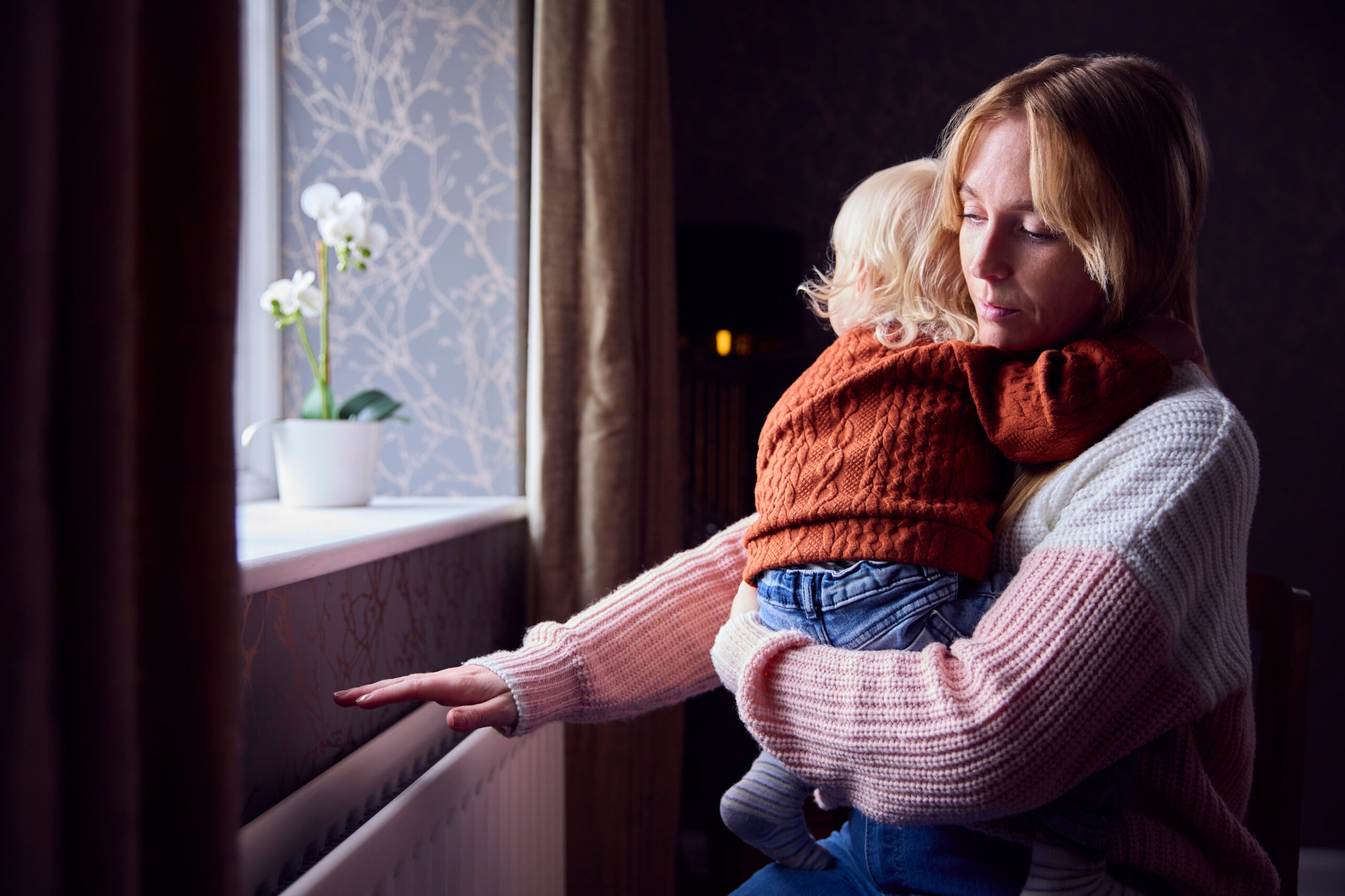
This struggle to make ends meet, combined with seeing nearly everyone on television appearing more financially successful, must surely make struggling moms feel like failures and obviously contribute to their lack of emotional and mental well-being. In fact, the Report stated that even girls as young as 12 express concerns about their financial future.
Safety Amidst Rising Violent Crime
Another persistent issue is safety, which encompasses many other challenges, such as violence against women, sexual harassment, rape and assault, intimate partner abuse, also known as domestic violence, and the objectification of women in movies and television. Objectification should be placed at the top of this hierarchy because it inherently grants permission for abuse. As the report explains, “There is some evidence to suggest that perpetrators of crimes against persons can be particularly violent when they view their victim as an object and not as a human being.” It further documents how disproportionately women are portrayed as sexual objects, how hypersexuality onscreen correlates with Hollywood’s offscreen sexual harassment problem, and how storytelling can trivialize and normalize violent acts.
In California’s real world, violent crime is on the rise, while property crime is decreasing. The Report stated that reported rapes in 2023 were fairly low, only “14,000 California women and men,” noting, “Crimes of a sexual nature, such as rape, are disproportionately carried out against women.” However, sexual assault is significantly under-reported. The Report cited, “The California online Violence Experiences (CalVEX) survey, which assesses adults’ experiences of physical violence, sexual violence, and intimate partner violence, among other things, found that less than 10% of those who experienced physical or sexual violence filed an official claim.”
The Next Generation
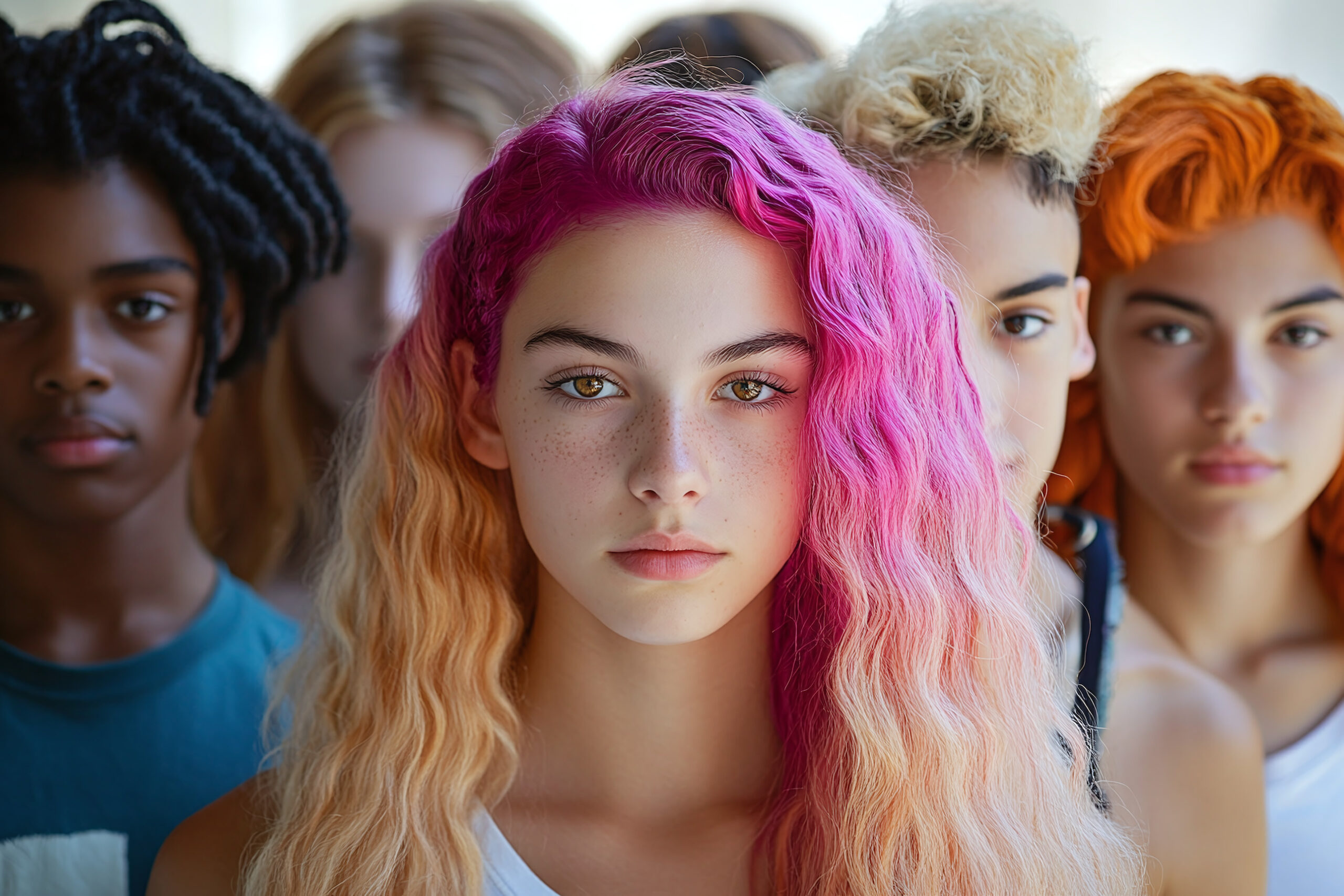
The Report shows the progress of depression from 2015 to 2021 among girls and boys aged 12 to 18, stating, “The emotional well-being…is of great concern to their parents and middle/high school teachers and administrators. An increasing proportion of girls in grades 7-12 are reporting chronic sadness and hopelessness—and in almost twice the proportion of boys.” The most recent total numbers indicate, “Roughly half of California’s high school girls (and one-third of boys) exhibit a form of depression—feelings of sadness and hopelessness.” However, it continues in a hopeful tone, citing numerous studies that demonstrate how the arts can promote emotional healing, “permitting better learning and school performance, and…can help in development of skills critical for a life lived to potential.”
Feelings of emotional well-being are critical for living lives to their potential, and the Report summarizes results about the “Universal Role for the Arts” from the World Health Organization,” the arts in many forms offer a way to process emotions and to cope with an illness or injury.” However, few women report feeling they have the free time to participate, even among those who reported more equitable household responsibilities. This is also a persistent issue. Feelings of well-being require time and space for being well, feeling well, and being able to explore possibilities. Perhaps real change happens from within, starting with women valuing themselves and one another without limitations, supporting and expanding systems that produce a more equitable way of living. Getting outside of the box we’ve been put in will not be comfortable, but it is the way we can achieve true abundance and the time to create a world that supports all of us and art that tells stories about the best of us.