

 From our earliest days, women learn to perform gender, gathering experiences and assembling ideas about what it means to be a woman and what society tells us we’re capable of. This is nothing new. Throughout history, we have believed that categorizing – aka stereotyping – one another is the way to live because it’s how it has always been done. The Council of Europe writes, “Stereotypes about women both result from and are the cause of deeply engrained attitudes, values, norms and prejudices against women. They are used to justify and maintain the historical relations of power of men over women as well as sexist attitudes which are holding back the advancement of women.”
Planned Parenthood takes it a step further. “A stereotype is a widely accepted judgment or bias about a person or group — even though it’s overly simplified and not always accurate. Stereotypes about gender can cause unequal and unfair treatment because of a person’s gender. This is called sexism.” When women advance and step up to lead, sexism – a prejudice or discrimination based on a person’s gender – is a real threat, especially because the roots are often based on false beliefs or generalizations about gender.
Our book, In This Together (2019), describes three types of sexism: benevolent, hostile, and internalized. These are referred to as “attitudes that disadvantage women” and are propagated by women as well as men.
Benevolent sexism seems like it should benefit women because it rewards us for being kind and compliant and for following traditional norms. For example, when a man says he wants to protect you, many women feel they’ve received a compliment, but that’s benevolent sexism. It is insidious—it’s restrictive, and it is designed to keep you in a subservient place, being rooted in men’s feelings of superiority.
Hostile sexism is more obvious since it overtly punishes women for straying from narrow traditional roles and threatening men’s primacy. Women pioneers in various men-dominated workplaces are insulted, objectified, degraded, and victimized by physical and sexual assaults for daring to step out of their lane, and this has become more prevalent with threats via social media.
Last but definitely not least is internalized sexism, which occurs when the belief in women’s inferiority becomes part of the woman’s own worldview and self-concept. This can severely limit a woman’s aspirations and cause her to condemn and obstruct other women who want to break out of traditional gendered roles. Combined with benevolent sexism, women who have internalized attitudes of women being less-than, have a stake in maintaining the current gender hierarchy. Men are still seen culturally as protectors and providers, which makes it difficult to unravel, especially when seen within the constructs of systems created for powerful men by powerful men.
Women’s leadership must scale a mountainous hurdle to succeed in a world where men are still endowed with power, just because they’re men. Lucina DiMeco, co-founder of #ShePersisted, said in her podcast interview, “a woman leader is almost a contradiction in terms…it’s a new paradigm we need to establish. And any…threat to the establishment…is enough to bring us back to old biases…that maybe women are not good enough.” Why not? Frequently women are given the top job when corporations are in trouble, which sets up women CEOs to fail. But surprise! They do not. They turn things around, analyze the problem, bring together strong diverse teams and push through the complexities that threaten to bury the company. They bring finances into the plus column and embark on new ventures the old guard of men never imagined.
Perhaps it’s this lack of imagination that keeps sexism winning over the advancement of women’s leadership. We typically do the same old thing until the same old thing is so dysfunctional it threatens our survival. In her book, Electable: Why America Hasn’t Put a Woman in the White House…Yet, NBC news correspondent Ali Vitali points out how gender governs the structure of a “system built for straight white men by straight white men.” Vitali covered the 2020 presidential race, where a record-setting six women candidates ran in the primary for the top spot on the Democratic ticket, and provided a lot of perspective about the women, their platforms, and the reaction of the press and others to women running for the presidency. Her most overarching observation is, “Breaking through glass ceilings means you get cut. It was true for Hillary Clinton, and it’s true for Harris.”
Looking at the women who ran in 2020, their strategies for winning, and the response of the public and the press reveals the double-bind women face in politics where sexism is the true opponent. While Harris was criticized for not having a clear policy, Kirsten Gillibrand assembled a cluster of policies she called the “Family Bill of Rights,” and promised to “fight for your families as hard as I fight for my own.” Vitali notes that Kirsten made womanhood “her explicit selling point.” But somehow, supporting our families with all they need to produce sustainable generations was seen as “too niche.” On a broader scale, Elizabeth Warren used her decades of experience in the Senate to develop policies to fix every problem. Her slogan became, “I have a plan for that.” What these candidates lacked was they weren’t men.
Vitali explained how the cultural system punishes women and forgives men. Strong women are seen as abrasive, too loud, too aggressive, too…fill-in-the-blank, while men behaving similarly are seen as powerful, strong, the “protectors.” It’s difficult for women to be Goldilocks and hit it just right on the campaign trail when they are called out for what is considered softball campaigning for men. In 2020, Kamala Harris visited a thrift store in Columbia, South Carolina, on Lady Street, a street of women-owned businesses. When someone held up a sequined jacket, Harris tried it on and someone posted it on Twitter. The innocent, meet-the-public shopping trip became #SequinGate, with the conservative media escalating criticism from “embarrassing” to “outrage” and accusing journalists of being too chummy with the candidate. Vitali compares this event with other retail-politicking stops of Barack Obama and Mitt Romney, both of which received praise for reaching out to local shops but lacked the stigma of being a woman.
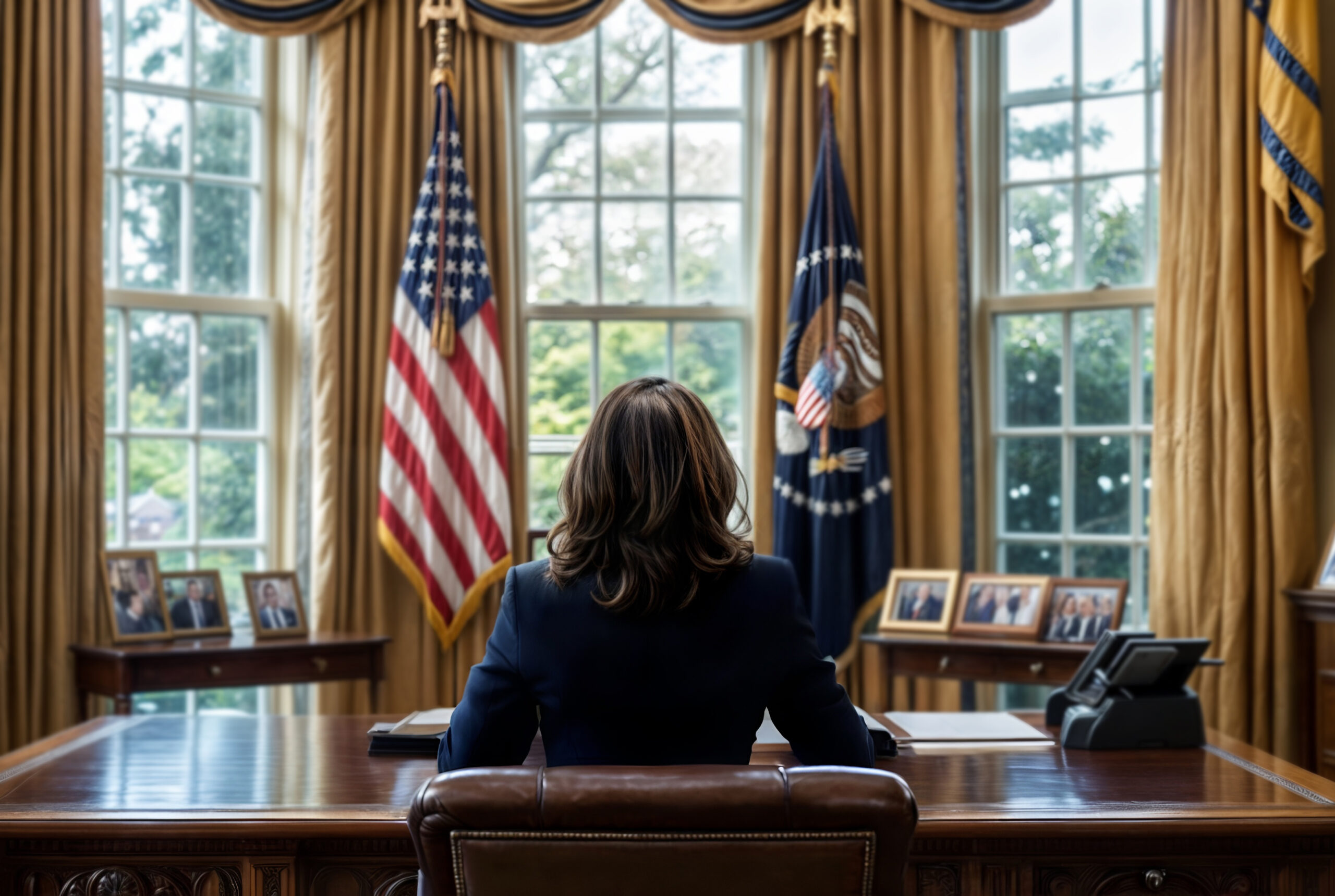
Right now, everyone says they want change. Isn’t the biggest change obvious? Elect women – from the City Council to the Oval Office. A woman brings a different perspective, one that we trust and value and one that can help us nurture and raise our families. A woman reaches out to rescue a child from an oncoming car without thinking about whether or not it will benefit her. A woman knows that our superpower rests in the relationships we form, the bonds that unite us, and by unleashing all the talent available to fix a problem. The same old is another posturing man, who speaks loudly and carries an alleged big stick to protect and defend us. Yet if you look at who are the successful leaders in the world, look at the women who led during the COVID crisis and who saved the most lives. Who do we actually trust most to protect and defend? It’s the women who raised us, nurtured us, and set us on the path to succeed in the world. The obvious way to change the world is to push the same old sexism out of our way and put women in a position to lead.