

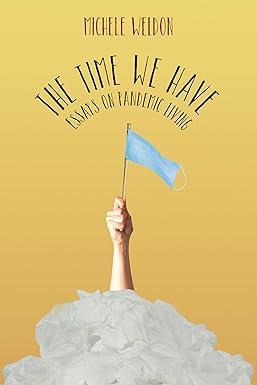
 In her book, The Time We Have: Essays on Pandemic Living, Michele Weldon creates a mood of vulnerable contemplation about herself, the people she loves, and the environment COVID created that left us forever changed. Whether you read books to journey to a far-off land, seek inspirational words, learn something new, or cozy up with relatable story, there’s probably more than one essay for you. As a professional journalist and “truth teller,” Michele says that she wants her words to matter; she wants to matter. And this book reminds the reader, most of all, that life really does matter.
Reading this book feels like an afternoon conversation with a good friend. Opening with her personal vulnerabilities and introducing herself by way of her innermost fears, hopes, and joys, Michele focuses the reader’s attention on people, places, and things in the context of COVID. She admittedly avoids risks and prefers to think of herself as a “quietly courageous survivor,” which is why her description of the pandemic as a “cultural rollercoaster none of us wanted to climb aboard as passengers” and a “real-life horror movie” is particularly apt.
Her masterclass writing skill mixes millions of facts—and deaths—with stories of personal impacts, reactions to the greater world, and how it all affected her way of life in ways that seem indulgent at times and expert stream-of-consciousness at others. So, at one point, Michele recognizes her privilege of working from home (working at all) and “the cultural stress that caused people to attack one another—literally,” with asides about her Tuesday night amateur roller derby days. Not a risk-taker?
The Time We Have is about context and layers and how facing a pandemic and possible annihilation, personal or global, realigns one’s values and ideas about the world. For many, along with the casualty of millions of lives, came millions of lies, or disinformation as it came to be called. Michele calls lies told during COVID “a crisis of truth, a national pastime” and labels it as a “parallel pandemic crisis of misinformation.” Then she sharpens the point of her arrow for the only point that matters when she writes, “Lying about it didn’t save lives.”
The people in Part I of the book range from “Positive Patients” when the word “positive” became “not positive” to “Classmates” who she takes swings at for comically gendered behavior at class reunions (canceled due to COVID), “Partners” where she chuckles about online dating, and “Children,” which allows her to talk about her own and how her mother embedded the value that when you receive a lot, you are responsible. Michele writes, “To whom much is given, much is required.” And she questions if she has given enough or done enough. If writing skillful, important words—words that matter—count, she has, and should not quit.
In the chapter on “Feminists,” Michele waxes eloquently about how much she idolized Carrie Bradshaw and the gang from Sex and the City the first time out and her anticipation for the reboot, And Just Like That. Her friends even had a party where they all dressed as their favorite characters, which she includes, with lush descriptions of the more visually enticing outfits. But admiration halted when Mr. Big’s character was accused of sexual abuse and rape, not because of his crime but because of the lack of appropriate response by the female stars of the show. Michele calls out their vapid responses in a way that expresses her feeling of betrayal by role models she elevated beyond their worth. She reminds us that trauma is not about the event, it’s about the trauma that endures for years as a latent feeling and how women endure so much injustice amidst pervasive “himpathy” for the perpetrators, calling out the most famous of them by name. Most of all, she returns to the responsibility she was raised to have and calls on women to defend one another when she writes, “What is the crime—committing the act or telling?…This also leads to the question of responsibility that women hold for each other: to warn, to support, to honor, to believe.”
In The Time We Have and her six other non-fiction books, Michele has given us much to think about. The book is funny, thoughtful, hopeful, wise, generous, loving, outraged, outrageous, and more. The reader is invited to join her on her mother’s twin pink settees while she is chastised for breaking curfew (again), feel what she felt while in the ICU amidst COVID patients struggling to breathe, interact with the always smiling, attentive health care workers, experience the sadness and loss of her older brother during the last year of his life, from cancer not COVID, appreciate her favorite pair of shoes or any fancy footwear that was another casualty of the pandemic, and like every good book, take away observations to guide our healthy behaviors into the future. “Who I am with does not define who I am.” We hope, however, that she will keep giving, observing, and writing the words that paint pictures of her life and ours in the context of what we value (or should) in each other as human beings.