

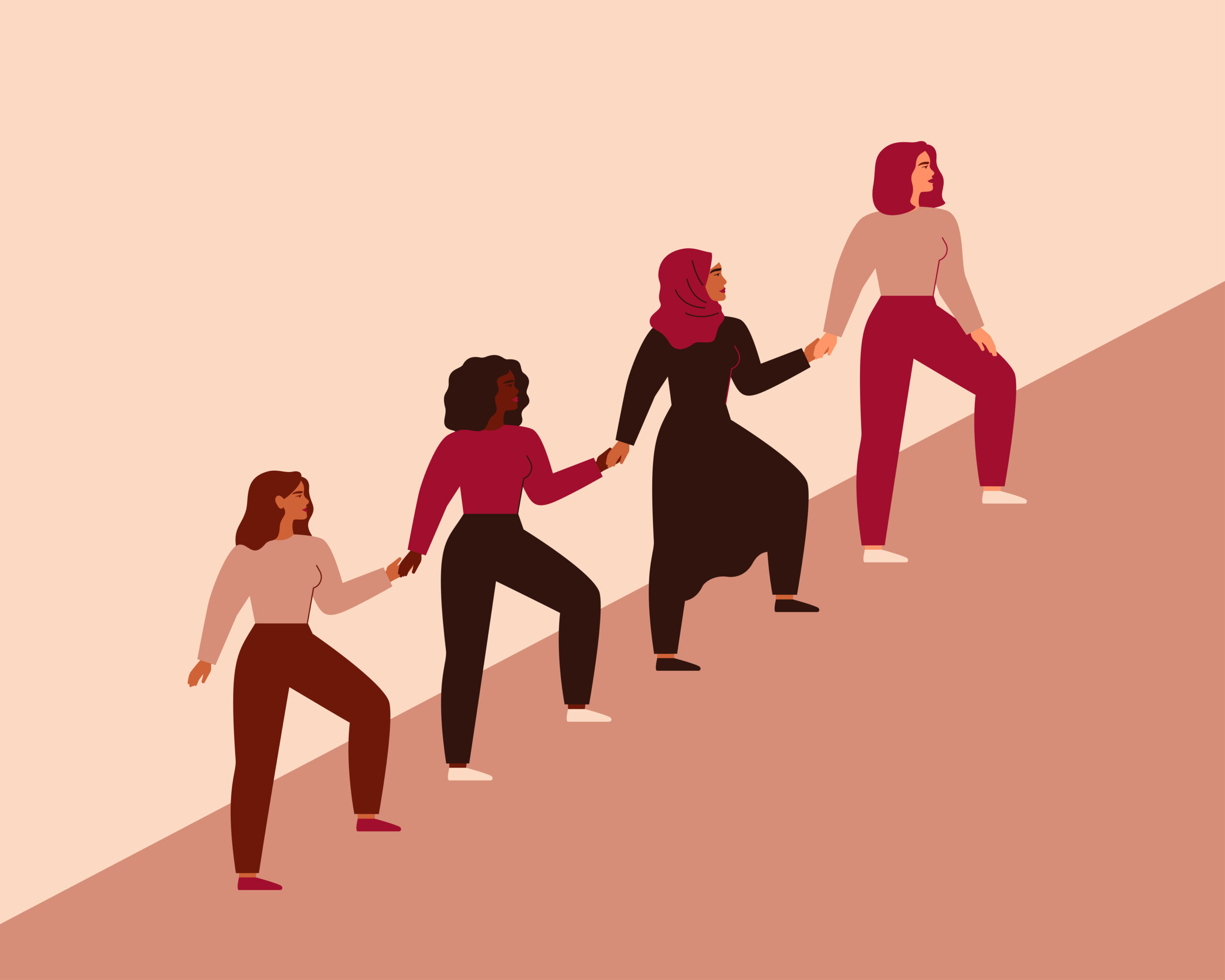
Women lead differently. While they aren’t usually the physically strongest people in the room, or the most powerful, they’ve learned to do the heavy lifting. That means listening to others, enlisting their talents and bringing them together to get things done. Heavy lifting can be anything from solving a persistent community problem, smoothing ruffled feathers of clients, team members, or outraged teenagers, creating a new brand, launching a new product, expanding markets, improving profitability, or saving a corporation from bankruptcy—not to mention making systemic changes along the way to improve the lives of others.
The biggest difference is that, by nature, women look out for others. “An empowered woman empowers everyone around her,” said Doree Donaldson, President of Convoy of Hope’s Women Empowerment Program, in her essay, “The Domino Effect: A Global Call to Empower Women,” in the newly released book, Mission Matters Women Leaders – Power and Purpose Volume 1. Doree cites a Yale study that lists the advantages of supporting a woman with education and seed money. Through the years, Convoy’s program has lifted women out of unimaginable poverty into business ownership that has, in turn, transformed the economies of whole communities. That’s the domino effect of women’s leadership. When you allow one empowered woman to lead, she lifts others along the way. This isn’t limited to developing countries; it’s what happens when women step up to lead.
In her fight to achieve total parity for women by 2025 through Take The Lead, Gloria Feldt quotes multiple sources to make the business case for women’s leadership in her essay, “How to Lead Like a Woman: Intentioning a Better World for All,” in Mission Matters Women Leaders – Power and Purpose Volume 1. “Higher ratios of women leaders in upper management=higher ROI, better decisions (Catalyst, McKinsey, EY, Bain, World Bank) and more. Gender equality throughout the workforce would add $13 trillion to the global economy (McKinsey, World Bank).”
When it comes to whether or not women are better leaders, Gloria asks and answers her own question, “We know that female legislators pass more bills and are more likely to work across the aisles to get the people’s work done. We know that companies with more women in their leadership make more money.” We also know from our research for In This Together, that employees often prefer a woman leader because of the collaborative management style. They also reported a happier, more supportive workplace culture and more opportunities for growth. Gloria says that it’s about power, which women often avoid. However, she says that power is just energy, and it can be used like a hammer to “demolish, destroy or punish” or “as a tool to build communities and construct ladders that will help others climb up with you.” This is what Gloria calls the “power TO” get things done.
The desire to make changes for the better or fix something they see as broken is key to women stepping up to lead. However, many feel awkward about wearing the title of leader. Dr. Sheila Robinson, founder, publisher, and CEO of Diversity Woman Media, likes to say, “Women make phenomenal leaders. They lead every day, in their families and communities. Whenever you influence another person to do something, you are a leader.” Women are natural and necessary leaders. Their families depend on it. When they move to the workplace or to serve in their communities, those skills get adapted from safety, nourishment and education to organizing successful teams to support one another’s ideas and talents for a common goal and a sustainable future.
We all lead in some part of our lives, whether we identify with the label or not. In her podcast interview, Gwyn Lurie, CEO of Montecito Journal Media Group, said, “Leadership is not an office; it’s not a job; it’s not a bank account. Leadership is a way of being in the world. We all have a responsibility to be leaders and move the world in the right direction.” From this perspective, we need to get past the bias we have against being a woman leader or allowing others to diminish our efforts to lead. We have a responsibility to ourselves and our communities to use our gifts as leaders, trust in our skills and build relationships to help, support and lift others—use our power TO—empower all of us.